The Thread Behind My Work

Operations & Transformation Leader

I build the systems that make organisations easier to lead, run, scale and improve.

13+ years across operations, transformation, program delivery and design leadership. I connect people, process, technology and business performance to bring structure to complex organisations.

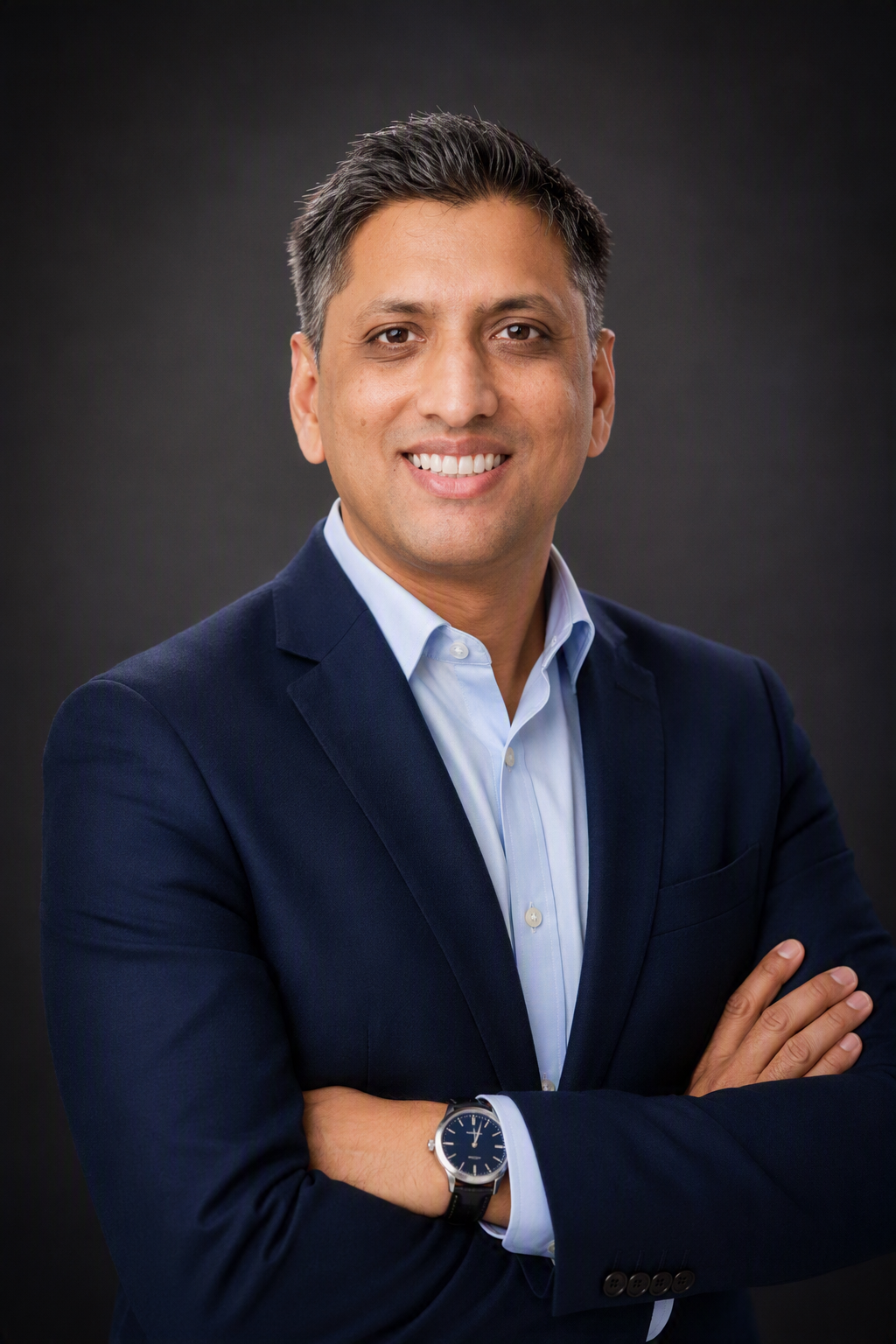
Kunal Dewalwar, Operations and Transformation Leader based in Pune, India
13+Years ExperienceAcross four organisations
70Member Org GovernedAtlas Copco Brand Studio
$1.73MRevenue InfluencedValueLabs · 7 months · team presales result
60%System Cost ReductionAtlas Copco, Zoho migration
<1%Escalation, 150+ ClientsValueLabs
About

I build the systems that make organisations easier to lead.

Thirteen years, four industries, one consistent instinct: bring structure to environments that feel unpredictable.

Where this began

I started as an architect, where I learned that good outcomes depend as much on execution as on design. That instinct to understand the structure before addressing the symptoms carried me from designing physical spaces to designing the systems that let organisations perform: operating models, governance frameworks, workflows, and the reporting that makes decisions easier. Along the way I have managed more than 150 client engagements, leading cross-functional teams and strengthening governance.

Today I lead operational governance for Atlas Copco's 70-member in-house Brand Studio in India, which supports business units across the globe. My focus is process transformation, workflow optimisation, and data-driven decision-making. A Master's in Strategic Design Management from NID Ahmedabad, with a collaborative programme at IIM Ahmedabad, shaped how I think about systems and organisational growth.

How I solve problems

I believe effective problem solving begins with understanding, not assumptions. Before recommending changes, I take the time to understand the current state by engaging with stakeholders, analysing processes, and identifying where challenges originate. Rather than addressing issues in isolation, I examine how operations, processes, communication, accountability, financial management, and data interact within the broader system. This enables me to identify root causes and implement solutions that deliver meaningful, sustainable improvements.

2012 – 2014

Master of Design, Strategic Design Management

National Institute of Design (NID), Ahmedabad, including a collaborative programme with IIM Ahmedabad.

2005 – 2010

Bachelor of Architecture

BKPS College of Architecture, Pune.

Experience

Four organisations. One operating discipline, scaled up each time.

Expand any role for the full story: the challenge, the action and the measurable result.

Feb 2024 – Present · Pune, India · Reports to General Manager

Operations Manager, Brand Studio, Atlas Copco Group

Atlas Copco is a Swedish industrial manufacturing multinational. The Brand Studio is its India-based internal creative and production team, serving business units globally. I lead operational governance for the studio, reporting directly to the General Manager.

The Challenge

  • No standardised project intake or milestone governance
  • No defined escalation pathways
  • Role ambiguity across business units
  • Limited visibility into pipeline health, utilisation, and delivery risk
  • Legacy project management platform with no real-time visibility

What I Did

  • Designed the studio's operating model and role architecture
  • Directed a full-scale platform transformation to Zoho, zero downtime
  • Institutionalised PMO governance and 20+ SOPs
  • Built monthly executive reporting for the General Manager
60%System Cost Reduction
20%Turnaround Improvement
94%Audit Issues Resolved
70People Governed

Read the full case study →

Aug 2020 – Dec 2023 · Hyderabad, India

Design Manager, DesignOps, ValueLabs Pvt. Ltd.

ValueLabs is an IT services and digital transformation company. I owned delivery governance for its UX and Digital Experience practice, spanning enterprise clients across APAC and EMEA.

The Challenge

  • Fragmented delivery across 8–10 simultaneous engagements
  • Inconsistent quality, no standardised governance
  • No structured presales model
  • Performance gaps across a 30–40 person team

What I Did

  • Restructured team operations with standardised delivery governance
  • Built a coordinated presales operating model
  • Redesigned delivery workflows, cutting turnaround time
  • Directed resource planning across 150–200 concurrent accounts
$1.73MRevenue Influenced
69%Presales Conversion
<1%Escalation, 150+ Clients
50%Productivity Improvement

Read the full case study →

Dec 2019 – Jul 2020 · India

Design Manager, Bonito Designs

Bonito Designs is a residential interior design company. I took over operations for a 30-plus person multidisciplinary team that was, at the time, the organisation's lowest-performing unit.

The Challenge

  • Team ranked lowest-performing in the organisation
  • No consistent quality assurance process
  • Delivery timelines inconsistently met

What I Did

  • Instituted performance accountability frameworks from the ground up
  • Owned delivery governance, design reviews, and quality assurance directly
  • Rebuilt operational discipline across resourcing and execution
100%Business & Financial Targets Met
30+Person Team Led
Apr 2015 – Dec 2019 · India

Design Manager, Client Success & Delivery, Indi Design

Led a 10–15 person team across architecture, wayfinding, and experiential design engagements, including the Ras Al Hamra wayfinding initiative in Muscat. This included full-cycle delivery governance and serving as the primary interface between clients, consultants, and vendors on multi-year programs.

2009 – 2015 · India

Earlier Career, Architecture & Project Delivery

A&S Designs · Thakur Associates · Chawgule & Sant Associates. Progressed from Trainee Architect to project delivery roles across civil, institutional, and commercial engagements. This built the planning, coordination, and stakeholder-management discipline that underpins my current operations leadership.

Impact

A concise record of outcomes.

What changed because of the work below. The strongest results across four organisations, each one an unstructured problem turned into a more effective way of working. The two largest, the Zoho migration and the studio's operating model, are covered in full under Work.

PMO Governance

Studio Operating Model & Role Architecture

Designed the Brand Studio's operating model from scratch at Atlas Copco, eliminating role ambiguity across business units.

70-member org · GM-level reporting
Executive Reporting

Power BI Operational Dashboards

Built monthly GM-level reporting consolidating pipeline health, on-time delivery, utilisation, and risk flags.

94% of audit discrepancies resolved
Resource Governance

Real-Time Capacity & Bench Tracking

Real-time visibility into capacity across 70+ people, with skill-based allocation to reduce quality risk.

100% urgent allocation success rate
Delivery & Presales

Coordinated Presales & Delivery Operating Model

Connected commercial strategy to delivery capacity at ValueLabs, with structured accountability from proposal through execution.

69% conversion · $1.73M revenue influenced
Team Turnaround

Performance Accountability Rebuild

Reversed a 30-person team's lowest-performing status at Bonito Designs by instituting structured accountability.

100% of financial targets delivered
Work

Three transformations, told in full.

How the outcomes above actually happened. The real sequence of discovery, decisions, and trade-offs, not the highlight reel.

Case Study 01 · Atlas Copco

Legacy Platform to Zoho: A Structured Transformation

A legacy platform was slowing the studio down. I ran a 40-week, evidence-led migration to Zoho that cut platform costs by 60% with zero downtime.

40-Week Programme 70+ Users India-Based Brand Studio 2025

View Case Study →

Why we had to act

Our project management system was no longer serving the evolving needs of our teams. It slowed us down, frustrated users, and lacked the adaptability modern teams demand. The mission: design and deliver a tool that helps teams collaborate smarter, work faster, and lead with clarity.

I'm not always clear on what to work on or prioritise.

Design Team, User Sentiment Survey

Feedback like this, alongside comments such as "the dashboard gives no clear visibility" and "we end up avoiding the old platform for real collaboration", made the case for change concrete rather than theoretical.

Six interconnected gaps

Before proposing any changes, I ran structured interviews across the team. The friction wasn't isolated to one system complaint. It spanned six linked areas:

01Org Structure
02Financial Management
03Operational Efficiency
04PM & Accountability
05Communication
06Data Analysis

A 40-week, evidence-led transformation

  • Weeks 1–3, Preparation: Identified core challenges with the legacy platform, defined success criteria, aligned leadership on goals.
  • Weeks 4–9, Vendor Research: Shortlisted Monday.com, Zoho, Microsoft Planner, and ClickUp; narrowed to Monday.com and Zoho after internal feedback and needs assessment.
  • Weeks 10–19, Pilot & Evaluation: A cross-functional pilot group, made up of Account Management, Project Management, Design, and Finance, ran hands-on demos and testing, scored on usability, reporting, automation, and scalability.
  • Weeks 20–40, Customisation & Go-Live: 4–5 months configuring Zoho Projects, CRM, and Books to match real workflows, with role-based dashboards and automation.

Zoho was selected through a collaborative, KPI-driven evaluation with real user input. It wasn't a top-down decision.

"Say Hello to Zoho": the internal campaign

A platform switch fails or succeeds on adoption, not configuration. Starting one week before launch, I ran a structured, week-by-week communication campaign:

  • Week 1, Awareness: "Zoho is coming!" This shared why the change was happening and what to expect.
  • Week 2, Education & Engagement: Tool capabilities, early benefits, testimonials from the pilot group.
  • Week 3, Training & Support: Role-specific training sessions, SharePoint hub with tutorials and guides.
  • Week 4, Launch Plan: Confirmed launch date, plus a final checklist covering logins, sessions, and who to contact for help.

Training was tailored by function. Project Managers, Account Managers, Designers, and Finance each had customised sessions, supported by detailed user manuals, FAQs, and step-by-step video tutorials. During launch week, Zoho representatives were onsite for real-time support, and the Operations team tracked every reported blocker for fast escalation and resolution.

To manage the risk of migrating legacy data, I chose a controlled overlap strategy: ongoing and critical projects were closed out on the legacy platform, while new projects started fresh in Zoho. This minimised data loss without an all-at-once cutover.

Results

60%Cost Reduction
7.8/10Adoption Score
ZeroDowntime
10New Capability Gains

Platform costs were reduced by 60%, while the new platform provided more capabilities than the previous system. The migration ran with full operational continuity: zero downtime and zero data loss, plus a 7.8 out of 10 adoption satisfaction score, with user complaints reduced significantly compared to the legacy system. The transition also recorded the highest invoicing value the studio had seen, reflecting better-governed projects and a healthier delivery pipeline.

Case Study 02 · Atlas Copco

Standardising the Brand Studio's Way of Working

Alongside the Zoho migration, I standardised how work actually moves through the studio, from first lead to final invoice, with clear ownership at every stage.

Lead → Opportunity → Project → Invoicing 9 Defined Roles

View Case Study →

One studio, dozens of informal variations

A platform migration alone doesn't fix inconsistent ways of working. It just moves the inconsistency onto new software. Alongside the Zoho transition, I designed and documented a single, unified process flow covering every stage of studio work, from the moment a lead enters the system to final invoicing, with explicit turnaround times and named ownership at every step.

Stage 01

Lead Handling

TAT: 4-hour first response
  • Verify service scope fit
  • Capture brief details
  • Structured follow-up cadence (Day 3 → Day 30)
Led by Account Manager
Stage 02

Opportunity Handling

TAT: 24hrs standard / 48hrs complex
  • Scope definition & estimate creation
  • Proposal review and approval (BL/GM)
  • Present proposal to customer
AM + Delivery Lead
Stage 03

Project Handling

TAT: based on scope
  • Resource & schedule planning
  • Self-QC + Creative Manager QC before delivery
  • Customer acceptance & "First Time Right" tracking
Led by Delivery Lead
Stage 04

Invoicing & Closure

TAT: 24hrs standard / 48hrs custom
  • Billing status check & invoice creation
  • Discrepancy resolution
  • SAP reconciliation & archive
Led by Business Controller

Governance you can actually audit

Every stage above carries an explicit turnaround-time commitment and a named accountable role: Account Manager, Delivery Lead, Creative Manager, Business Controller, Business Lead, or General Manager. This removes ambiguity in escalation paths and ownership. This was one of the 20+ SOPs built during the Atlas Copco engagement, and it's the operational backbone the Zoho platform was ultimately configured to run.

Case Study 03 · ValueLabs

Scaling Enterprise Delivery Across 150–200 Concurrent Clients

Delivery across 150–200 concurrent accounts was fragmented and reactive. I rebuilt the governance model that made it scale.

Aug 2020 – Dec 2023 APAC & EMEA 30–45 Person Team

View Case Study →

Fragmented, reactive, inconsistent

  • Fragmented visibility into resource utilisation, capacity, or allocation across projects
  • No standardised process for coordinating with internal teams
  • Presales operated reactively, with no structured, coordinated proposal process
  • No standardised process for providing customers with project status updates

Rebuilding delivery governance from the ground up

  • Established a standardised delivery governance framework
  • Implemented centralised resource planning and utilisation tracking
  • Introduced standardised cross-functional coordination workflows
  • Formalised accountability through RACI matrices, structured kick-off decks, and detailed project proposals

Results

$1.73MRevenue Influenced
69%Presales Conversion
<1%Escalation Rate
50%Productivity Gain

Turnaround time dropped 20% without quality loss. Escalations stayed under 1% across 150+ concurrent enterprise clients. I was recognised twice with ValueLabs' Star of the Month award.

Curious about the work behind the results?

Some details above are summarised for confidentiality. Happy to discuss further if needed.

Leadership

Structure over supervision.

How I build teams, manage stakeholders, and drive change, in practice rather than in theory.

Building Teams

Accountability frameworks over micromanagement

I've led teams from 10 to 40 people. What scales across all of them is clear expectations, defined ownership, and visibility into performance. At Bonito Designs, this approach took a team ranked lowest-performing in the organisation to 100% of its assigned financial targets.

Managing Conflict

Escalation paths defined before conflict happens

Most operational conflict comes from ambiguity. At Atlas Copco, defining explicit escalation pathways was one of the first governance changes I made. The same discipline held a sub-1% escalation rate across 150–200 concurrent engagements at ValueLabs.

Handling Stakeholders

Structured accountability, not just relationship management

At ValueLabs, I formalised stakeholder accountability through RACI matrices, structured kick-off decks, and detailed project proposals. At Indi Design, I served as the direct governance interface between clients, consultants, and vendors on multi-year programs.

Prioritising

Map the system before triaging the symptoms

Before proposing changes to Atlas Copco's operating model, I ran discovery interviews and mapped how gaps in org structure, finance, efficiency, and communication were interconnected. Prioritisation followed the map, not the loudest complaint of the week.

Making Decisions

Evidence before commitment

The Zoho decision wasn't made on vendor pitches. I ran a structured evaluation of four platforms against a KPI scorecard, backed by user interviews, then piloted the leading candidate with a cross-functional group before committing to a 40-week build.

Driving Change

Change management is a campaign, not an announcement

For the Zoho migration, I ran a structured four-week internal campaign covering awareness, benefits, training, and go-live readiness, reaching 70+ users. The result was a 7.8/10 adoption score, with users arriving at go-live trained rather than surprised.

Skills

Competencies, organised by category.

The case studies above prove most of this in practice. Click any skill for the specific evidence behind it.

Operations & Operating Models

Operating Model Design

Designed the Brand Studio's operating model and role architecture from scratch — nine defined roles across the Lead → Opportunity → Project → Invoicing flow — eliminating role ambiguity across global business units.

SOP & Framework Architecture

Authored the unified Lead → Opportunity → Project → Invoicing workflow, one of 20+ SOPs built at Atlas Copco, each with an explicit turnaround-time commitment — from a 4-hour first response on lead handling through to invoicing closure.

Resource & Capacity Planning

Directed resource planning across 150–200 concurrent accounts at ValueLabs, and built real-time capacity and bench tracking across 70+ people at Atlas Copco.

Transformation & Change

Enterprise System Migration

Directed the legacy-platform-to-Zoho migration: a 40-week, evidence-led transformation evaluated against three other platforms before selection, delivering zero downtime and a 60% cost reduction.

Change Management & Adoption

Ran the "Say Hello to Zoho" adoption campaign — function-specific training, onsite launch-week support, and a controlled-overlap migration strategy — landing a 7.8/10 adoption score.

Vendor Evaluation & Selection

Ran a structured, KPI-scored evaluation of four platforms, backed by a cross-functional pilot, before committing to a 40-week Zoho build.

Program & Portfolio Governance

Delivery Governance

Owned delivery governance for ValueLabs' UX and Digital Experience practice across 150–200 concurrent enterprise accounts.

RACI & Accountability Frameworks

Structured accountability documentation via RACI matrices, kick-off decks, and detailed proposals, establishing clarity from initiation through execution.

Risk & Escalation Management

Defined explicit escalation pathways before conflict occurred, sustaining a sub-1% escalation rate across 150–200 concurrent engagements.

People & Leadership

Team Building & Performance Accountability

Took a 30-person team ranked lowest-performing in the organisation to 100% of its assigned financial targets, by building accountability frameworks from the ground up.

Cross-Functional Leadership

Led the cross-functional pilot group spanning Account Management, Project Management, Design, and Finance through the Zoho evaluation and rollout.

Stakeholder Management

Formalised stakeholder accountability through RACI matrices at ValueLabs, and served as the direct client-vendor governance interface at Indi Design.

Technology & Workflow Optimisation

Executive Operational Reporting

Built monthly GM-level reporting consolidating pipeline health, on-time delivery, utilisation, and risk flags.

Power BI Dashboards

Built Power BI dashboards that resolved 94% of audit discrepancies.

Workflow Redesign

Redesigned delivery workflows at ValueLabs, cutting turnaround time by 20% without quality loss.

Business Performance

Presales & Commercial Coordination

Built the coordinated presales operating model connecting commercial strategy to delivery capacity, driving 69% conversion and $1.73M in revenue influenced over 7 months.

KPI Framework Development

Scored the Zoho vendor evaluation against a KPI framework covering usability, reporting, automation, and scalability.

Technology & Platforms

Zoho Suite Power BI Microsoft 365 Workamajig
Contact

Let's talk.

Open to senior Operations, PMO, Program Delivery, and Transformation leadership roles, fully remote and global.

Phone +91 73874 86925
Location Pune, India. Open to global remote roles.
Résumé Download PDF ↓